Newsletter Disruption and Societal Change - October
Problems viewing this page? View online
Logo der Technischen Universität Dresden
30.10.2023
 

Disruption and Societal Change

 
Editorial

Events and Happenings

TUDiSC Internal

Together towards Change

Dates

Contact us


Discourses in and of Disruption

New digital technologies now permeate almost all areas of society. This is accompanied by the spread of values stemming from network culture such as openness, participation, and transparency, which have become almost unquestionable norms. In the education and science system, this interplay of normative values and technical affordances is giving rise to a potentially disruptive change that is impacting the way research is conducted and evaluated. For instance, the publication of Open Access articles or the provision of research data on Open Science platforms are considered indicative of compliance with fundamental principles of ethics of science.
 
However, if we examine the discursive processing of the ongoing transformation of the science system, not only positive but also critical readings emerge, which put certain seemingly incontrovertible assumptions up for discussion. Contradictory interpretations and constructions thus shed light on frictions and possible ruptures in the discursive orders themselves. Taking a closer look at the intertwining of discourses and disruptions, as we will do in the upcoming conference "Discourses in/of disruption," gives way to a deeper understanding of the phenomenon of disruption and its social and epistemological dimensions.


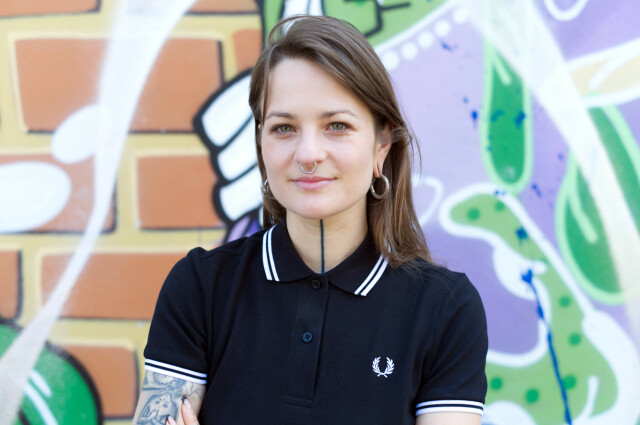
Ulrike Pfeifer, Researcher at TUDiSC
[© Ulrike Pfeifer]

Ulrike Pfeifer

Ulrike Pfeifer studied Linguistics, Literature, and Cultural Studies, with a focus on Applied Linguistics. Since the beginning of this year, she has been a research assistant in the DiaDisk project, which is part of the TUDiSC research network. Her research focuses on political linguistics and critical discourse linguistics. Currently, she is working on communicative strategies and linguistic positioning acts in science policy discourses in the context of the large-scale digital transformation of science and society.


You want to contribute to the newsletter? You want to write an editorial, you want to present your work or invite to one of your events? Send us a mail, we are excited about your participation!
 

Events and Happenings

[© srckomkrit/Fox/stokkete– stock.adobe.com]

Reminder | 4th TUDiSC Conference | Registration Now Open

As announced in last month’s newsletter, registration for the 4th TUDiSC conference is now open. With only around 5 weeks to go, we encourage you all to register as soon as possible. This way your place is secured, and we can have all necessary and related organizational planning in place well in advance.
We have an exciting and diverse program of presentations and workshops exploring the multifaceted nature of the conference theme "Myths of Disruption". Please see the program here.
We are especially looking forward to Adrian Daub's talk "Selective Disruption" on December 7th.
 
» Registration Form
[© Katharina Kaesling]

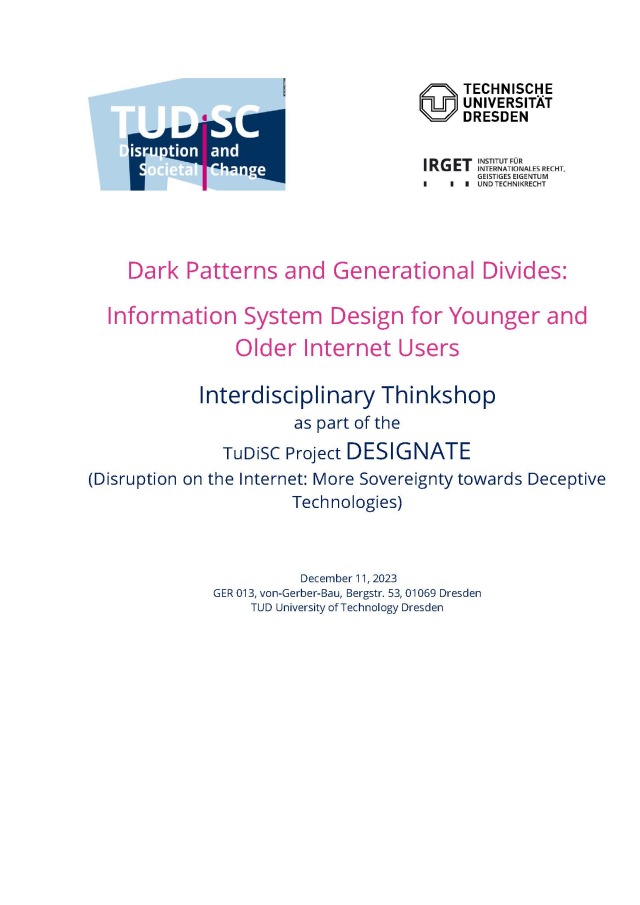
Thinkshop | Dark Patterns & Generational Divides | December 11, 2023

We are pleased to announce that the TUDiSC project Designate is set to host another exciting event on the highly topical issue of the so-called dark patterns humans are exposed to through technological devices and interfaces. This particular "Thinkshop" looks to analyze the subject specifically from the perspective of the participation and protection of younger and older people, and therefore understand any resulting or associated generational divides.

As a thinkshop, the event is conceived not only as an opportunity for interdisciplinary exchange, but also for the development of transdisciplinary approaches to dark patterns and generational divides. Following inputs from several disciplines, participants will be asked to discuss the ideas presented amongst themselves on the basis of guiding questions. Hence, the thinkshop requires active involvement of all participants.
Full event program to follow shortly...

When: December 11th, 2023, all-day Thinkshop

Where: GER 013, von-Gerber-Bau, Bergstr. 53, 01069 Dresden

 
 
» More Info
[© PantherMedia / Yuri Arcurs]

Conference | Reallabore – ExperimentierRäume für den Weg in eine nachhaltige Gesellschaft | April 11-12, 2024

The conference "Reallabore - ExperimentierRäume für den Weg in eine nachhaltige Gesellschaft" aims to continue the discourse on living laboratory research and practice. The conference is dedicated to conceptual, methodological and practical questions of research and design in living labs. It serves the dialogue between researchers and practitioners, transformers and urban and regional developers and enables an exchange of perspectives and experiences from research and practice. The conference creates a space for dialogue to address in particular the location and spatial references of living laboratories, their systematic documentation and knowledge transfer, and the anchoring of living labs as a research and governance approach. The aim is to bring together findings on how such practices and formats can be used to establish new partnerships and promote the transformation to a culture of sustainability.

The two-day conference is a collaboration between the TUDiSC project DOUbT and The Leibniz Institute of Ecological Urban and Regional Development
More information to follow shortly!
 
» More Info
 

Together towards Change

In this section, we highlight interesting events, calls, or information.
[© Holger Schoneville]

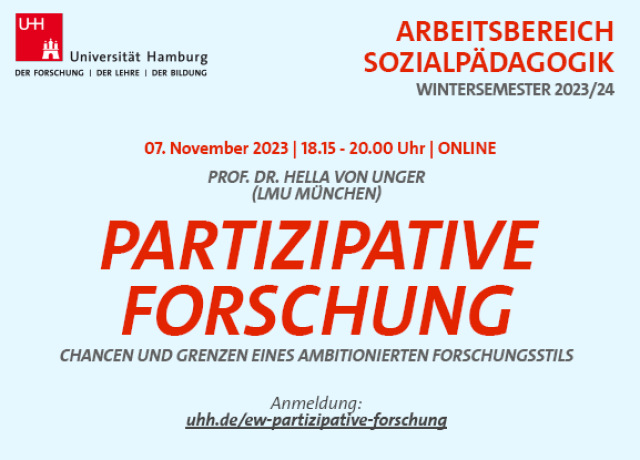
Online Lecture | Partizipative Forschung: Chancen und Grenzen eines ambitionierten Forschungsstils | November 07, 2023, 18:15-20:00

In the coming semester, the Department of Social Pedagogy at the University of Hamburg will deal with questions of participatory research in a number of events. The following event will take place online and the interested public is warmly invited to participate:
 
Hella von Unger (LMU Munich).
Participatory Research: Chances and Limits of an Ambitious Research Style.


» Register Here
[© Johanna Mehl]

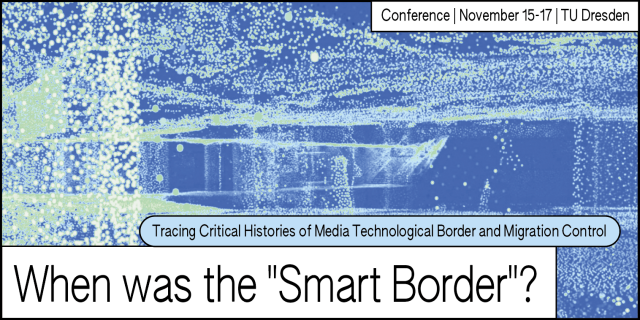
Reminder | Registration Open for Smart Borders Conference | November 15-17, 2023

With the date fast approaching we would like to take this opportunity to remind you to register your attendance for the Smart Borders conference. As the program – which are pleased to be able to share here - is testament to, the event promises to be exciting and intellectually stimulating, with input from a number of perspectives.
 
» Event Program
 
» More Info
[© ÖA GSW/Markus Spiske via Unsplash]

Event Series | Societal Change Forum Winter Semester 2023/24

The Societal Change Forum (SCF) is dedicated to relevant research topics in the humanities and social sciences that contribute to the understanding of societal transformation processes. Whether it is the climate crisis, migration, technological progress, populism or pandemic dangers - in recent years, particular attention has been paid to the conflictual nature of social confrontation. In this context, it is true for the present that social change must not only be understood as a phenomenon of dissolution. Rather, it is important to ask how future challenges will be dealt with in the area of tension between polarization and stabilization.

The humanities and social sciences in particular are developing common conceptual and comparative heuristics in the wake of those areas of tension, but also in interdisciplinary connection with the numerous disciplines at the TU Dresden.

The Societal Change Forum of the winter semester 2023/24 therefore gathers lectures from the fields of philosophy, psychology and sociology. Covering questions on migration, pacifism, generational justice or the role of algorithms, this year's forum is intended to be a discussion format for presenting and establishing diverse approaches within the participating disciplines at TU Dresden.
 
» More Info
[© Sergiu Spatan]

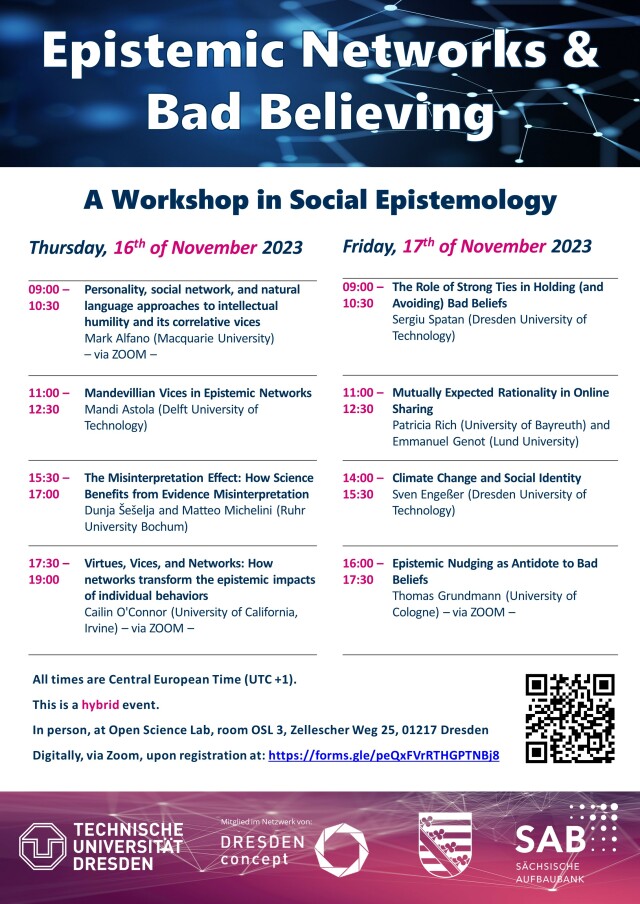
Workshop | Epistemic Networks and Bad Believing | November 16-17, 2023

We live in the age of strange conspiracy theories, fake news and “alternative truths”: from Pizza-gate and 5G conspiracies, to denying the results of properly organized elections and climate skepticism, many people seem to accept as true claims that are in no way substantiated by evidence. Following Neil Levy, we could call these bad beliefs.
 
Why do people hold bad beliefs? While it is customary, in traditional analytic epistemology, to study the individual features of people (their reliability, their epistemic virtues or vices etc.) in order to understand how they arrive at knowledge or end up with bad beliefs, recent work in social epistemology has pointed to the importance of epistemic networks in elucidating this matter. People’s beliefs, especially when it comes to social and political matters that pertain to their identity, are often shaped by the social networks the individuals are embedded in.
 
The objective of the workshop is to discuss the way bad believing (i.e., believing in scientifically unsubstantiated claims that concern vaccines, climate change, migration etc.) is shaped by the epistemic networks of the believers.

Where:
Open Science Lab, room OSL 3, Zellescher Weg 25, 01217 Dresden.
As a hybrid event all talks will also be streamed on Zoom.
 
» More Info
 

Upcoming dates

09.-10.11.2023
Workshop
Digitale Technologien und Vertrauen
DiaDisk
Ort   Open Science Lab
» more Information coming up
10.11.2023, 10 am
PI Meeting
PI Meeting
Ort   online
» Announced via Mail
14.11.23
&
17.11.23
Workshop
Dark Patterns - Manipulative Design on the Internet!?
Collaboration between TUDiSC project "Designate" and the State Center for Political Education
Ort   SLUB Makerspace (14.11.) &
COSMO Science Forum (17.11.)
» Event Page
15.-17.11.23
Conference
Smart Borders
A collaboration between TU Dresden and LSE
Ort   riesa efau Kultur Forum Dresden
» Event Page
16.-17.11.23
Conference
Discourses in/of Disruption
Ort   Open Science Lab
» Event page
24.11.23, 6:30 pm
PhD Meeting
Meeting of the PhD students of all projects
Ort   Hybrid
» Announced via mail
6.-8.12.23
Conference
4th TUDiSC Conference: "Myths of Disruptions. Programs, Narratives, and Utopias of Future Innovations"
Ort   August-Bebel-Straße 20 and COSMO Science Foum
» Event page
11.12.23
Thinkshop
Thinkshop | Dark Patterns & Generational Divides
Ort   GER 013, von-Gerber-Bau, Bergstr. 53, 01069 Dresden
» Event Page
19.01.24
Workshop
Conceptualizing Disruption
Ort   Open Science Lab
» upcoming
19.-22.03.24
Conference
Leakage
Inaugural Conference of stsing e.V.
Ort   TU Dresden
» Event Page
11-12.04.24
Conference
Reallabore – ExperimentierRäume für den Weg in eine nachhaltige Gesellschaft
Ort   Deutsches Hygiene-Museum Dresden
» Event Page
 

Contact us


Disruption and Societal Change Center
TUDiSC

Zellescher Weg 17
01069 Dresden

+49 0351 463 40629
 
   E-Mail
If you want to contribute to the newsletter, please send your suggestions by the 20th of each month. The newsletter will be released in the last week of the month.
 
Logo der Technischen Universität Dresden
Disruption and Societal Change Center
TUDiSC
Zellescher Weg 17
01069 Dresden
Scientific Coordination: Clara Jacobi

Communications Manager: Declan Galbraith

Chairperson: Prof. Dr. Christian Prunitsch
Logo Twitter Logo Facebook Logo Youtube Logo Instagram
Data protection Unsubscribe to newsletter

As far as technically possible, this newsletter has been created so it is accessible for people with disabilities. Should you nevertheless find something inaccessible, you can report it to us via our online form. Additional information on accessibility of newsletters at the TU Dresden can be found in our Accessibility statement for newsletters.
Legal notice
The legal notice of the TUD Dresden University of Technology applies with the following exceptions:
Responsible for the content of the newsletter:
Disruption and Societal Change Center
TUDiSC
Email: tudisc@tu-dresden.de
Telephone: +4‌9 (0) 351 463-40629
Picture credits:
Cover picture: © Amac Garbe
 
Note on links in this newsletter
This newsletter is generated and sent using the TU Dresden newsletter tool. The URLs included in it are overwritten by the system so that they start with ea.newscpt1.de. The links will nevertheless direct the user to the actual link destination in a secure and data protection-compliant manner. There is no user-related tracking. The digital signature (S/MIME) of the sender email address of this newsletter is also a sign of trustworthiness with regard to the content.