TUDiSC: Newsletter January 2024
Problems viewing this page? View online
Logo der Technischen Universität Dresden
22.01.2024
 

Disruption and Societal Change

 
Events and Happenings

Together towards Change

Dates

Contact us


You want to contribute to the newsletter? You want to write an editorial, you want to present your work or invite to one of your events? Send us a mail, we are excited to hear from you about your participation!
 

Navigating Disruption

American Philosopher Eric Hoffer has been quoted, “In times of change learners inherit the earth; while the learned find themselves beautifully equipped to deal with a world that no longer exists.” With the new year that just started, what issues will continue to influence our life in 2024? How will we be adjusting ourselves to disruption of all sorts? How can we build resilience and thrive in the face of disruption?
The idea of disruption doesn’t necessarily have a negative connotation, although the change it implies is often unwelcome. The key question is, how do we handle disruptions? How can we adopt an intentional mindset when dealing with disruption? Are we willing to shift our minds and behaviors and understand disruptions as possibilities? Are we able to adapt and take disruptions as an opportunity to grow, to expand our horizons, to accept other ways of thinking? Are we ready to step out of our comfort zone and challenge our beliefs and assumptions? How can we turn disruptions into a positive impact and extraordinary innovations?
How do we navigate digital disruptions, in particular? Digital disruption encompasses almost all areas of life: The emergence of AI-supported systems, as seen in smart devices such as the smartwatch you use when going jogging, a robot vacuum cleaner, AI in mobility (think GPS-devices, autonomous systems); AI in the medical field. Are we willing to learn to understand the new technologies behind it? How can we ensure that the advancement of the new technologies is in line with our ethical values? How can we ensure that the new technologies are safe and trustworthy? Or, as Digital Anthropologist Rahaf Harfoush asked in her keynote at Kulturpalast Dresden in October last year: Are we holding ourselves accountable for the impact of our technology?

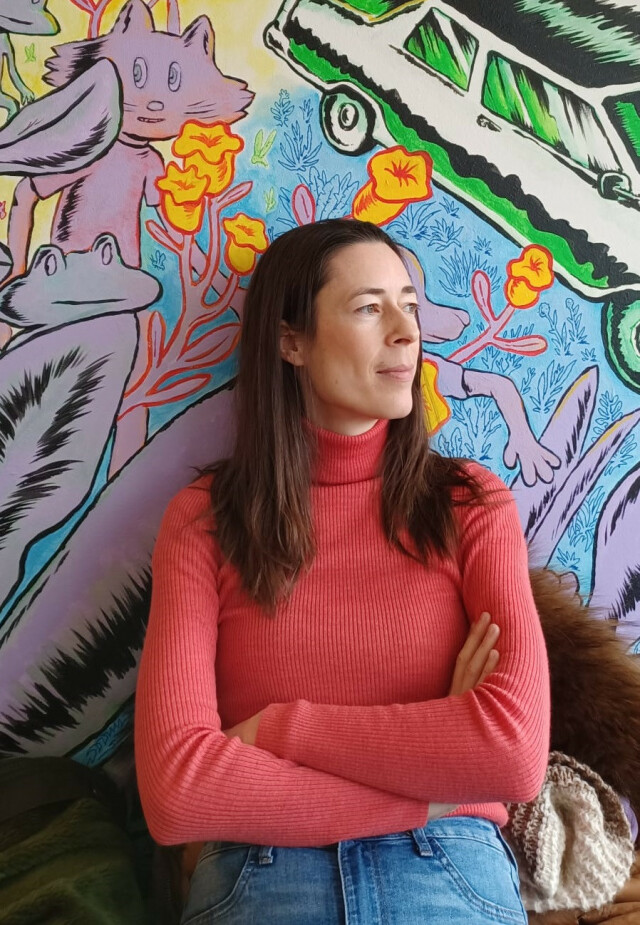
Johanna Wolter, M.A., Project Manager at Barkhausen Institut
[© Johanna Wolter]

Johanna Wolter

Johanna Wolter studied North American Studies, Romance Studies, and German Studies at TU Dresden and College of Charleston, South Carolina, USA, with a focus on race and ethnic relations in the US. Since May 2021, she has been a project manager at Barkhausen Institut, an independent research institute in Dresden which conducts application-oriented basic research on topics related to the Internet of Things (IoT) and provides information and communication technology foundations for building trustworthiness in future digitization-shaped societies. Johanna is also a co-founder of the Women@DDc Network, which was launched in 2022 and aims at connecting women in science and science management at DRESDEN-concept institutions and at increasing their visibility. Since fall 2022 she has been supporting the project DiDis of the TUDiSC network.


You want to contribute to the newsletter? You want to write an editorial, you want to present your work oinvite to one of your events? Send us a mail, we are excited to hear from you about your participation!


Events and Happenings

[© Copyrightangabe; Bildunterschrift]

Talkin 'bout a disruption

You can read up on the disruptive insights from the fourth TUDISC Conference now, featuring diverse presentations, engaging discussions, and high-profile keynotes by Kylie Crane and Adrian Daub. Despite challenges like snow chaos and strikes, the conference provided a vibrant platform for international participants to delve into disruptive themes and disciplines. Read the news and come back to us for questions!
 
» TUDiSC News
[© TUDiSC ÖA: Feodora – stock.adobe.com]

Workshop with Dr. Michael Gordian | Science Communication | 15.02.2024, SLUB Makerspace 2

Workshop: How to Communicate your Research Engagingly and Convincingly
 
In this short workshop, hosted by the TUDiSC coordination team, you will learn the basics of how to communicate your research effectively and how to present your work in an engaging and convincing manner. Particularly in an age in which science is increasingly accessible, especially given the academic world's engagement with social media, the communication of data and research can be seen as a critical element in the publication of research.

Make sure that your research is shared and understood by taking part in this exciting workshop with Dr. Michael Gordian, a trainer and seminar leader specialized in science communication, social skills and creative thinking.

Find out more 👇
 
» Event Page
[©PantherMedia / Andriy Popov]

New Publication | Prof. Kneuer & Prof. Bennett | Communication and Democratic Erosion

We are thrilled to bring to your attention an article that has arisen out of the collaboration between Dresden Senior Fellow Prof. Lance Bennett and TUDiSC PI (Projekt DiDis) Prof. Marianne Kneuer. Titled “Communication and democratic erosion: The rise of illiberal public spheres” the paper looks to explore the ways in which once stable democracies have experienced disruptive communication, along with the erosion of core institutions, and through this the authors propose a framework to compare the logics of illiberal and liberal democratic communications. In particular the authors look to shift the scholarly focus to the nature of systematic disruptions, with the aim of understanding national variations in how communication systems contribute to democratic erosion.
 
We are delighted to once again see such insightful and exciting research come out of the TUDiSC community, and look forward to witnessing the scholarly engagement with it that is sure to follow!

Check out the paper here 👇
 
» Publication
 

Together Towards Change

In this section, we highlight interesting events, calls, or information.
[© ÖA GSW]

Center for Integration Studies | Closing Ceremony

Since 2016, the Center for Integration Studies has been coordinating projects in cross-faculty research and transfer initiatives, on the thematic intersections of migration, integration and social cohesion. The topics and also some of the projects will be continued in new structures within the School of Humanities and Social Sciences, while some projects such as the participatory research project “MigOst”, which was carried out in collaboration with partners, will come to a scheduled end.
You are warmly invited to take part in the closing ceremony celebrating the work of the center and the next steps.

When: 05.02.2024
Where: Kleines Haus des Staatsschauspiel Dresden, Glacisstraße 28, 01099 Dresden

Please make sure to register your attendance!
 
Find out more 👇
 
» Event Page
[© easst-4S]

Call for Papers | Conference | EASST-4S 2024 Amsterdam: Making and Doing Transformations | 16 – 19 July 2024, Athena Institute at VU Amsterdam

You are invited to send proposals to the “EASST-4S 2024 Amsterdam Conference” where the subject of “Transformed Social Differentiation Through Digital Transformation” will be discussed in an open panel format.
 
The organizers lay out the concept with the following words:
In the age of digital transformation, the intersection between technology and society has led to changes in the way we understand and experience social or socio-technical differentiation that are beyond imagination. This panel addresses the complexity of these changes, with a particular focus on the representation and impact of mediatized entities, such as those found in games (in the form of avatars), as well as on platforms such as Instagram (in the form of body images), or in the form of personal data (e.g., e-identity, etc.), extending to the realm of mediated (sensory) perceptions as well as new and increasing encounters of (perceived or literal) mediated social touch.
 
Therefore, proposals that wrestle with questions around the multi-layered characteristics of digital technologies and social differentiation are requested. Please be aware the deadline for submissions is 12.02.2024

Find out more 👇
 
» Event Page
 

Upcoming Dates

15.02.2024
Workshop
Engaging Science Communication
Workshop with Dr. Michael Gordian
Ort   SLUB Makerspace 2
» Event Page
11-18.03.24
Research Studio
Research Studio | Extractive Pasts, Sustainable Futures?
Ort   TBC
» More
19-22.03.24
Conference
Leakage
Inaugural Conference of stsing e.V.
Ort   TU Dresden
» Event Page
11-12.04.24
Conference
Reallabore – ExperimentierRäume für den Weg in eine nachhaltige Gesellschaft
Ort   Deutsches Hygiene-Museum Dresden
» Event Page
18.04.24, 12 - 2 p.m.
Workshop
Conceptualizing Disruption
Ort   Open Science Lab 1
» Call
 

Contact Us


Disruption and Societal Change Center
TUDiSC

Zellescher Weg 17
01069 Dresden

+49 0351 463 40629
 
   E-Mail
If you want to contribute to the newsletter, please send your suggestions by the 20th of each month. The newsletter will be released in the last week of the month.
 
Logo der Technischen Universität Dresden
Disruption and Societal Change Center
TUDiSC
Zellescher Weg 17
01069 Dresden
Scientific Coordination: Clara Jacobi

Communications Manager: Declan Galbraith

Chairperson: Prof. Dr. Christian Prunitsch
Logo Twitter Logo Facebook Logo Youtube Logo Instagram
Data protection Unsubscribe to newsletter

As far as technically possible, this newsletter has been created so it is accessible for people with disabilities. Should you nevertheless find something inaccessible, you can report it to us via our online form. Additional information on accessibility of newsletters at the TU Dresden can be found in our Accessibility statement for newsletters.
Legal notice
The legal notice of the TUD Dresden University of Technology applies with the following exceptions:
Responsible for the content of the newsletter:
Disruption and Societal Change Center
TUDiSC
Email: tudisc@tu-dresden.de
Telephone: +4‌9 (0) 351 463-40629
Picture credits:
Cover picture: © Amac Garbe
 
Note on links in this newsletter
This newsletter is generated and sent using the TU Dresden newsletter tool. The URLs included in it are overwritten by the system so that they start with ea.newscpt1.de. The links will nevertheless direct the user to the actual link destination in a secure and data protection-compliant manner. There is no user-related tracking. The digital signature (S/MIME) of the sender email address of this newsletter is also a sign of trustworthiness with regard to the content.